
The information on Supplement Engine is for general educational purposes only and is not medical advice. It is not intended to diagnose, treat, cure, or prevent any disease, and should not replace consultation with a qualified healthcare professional. Availability and legal status of specific products vary by country — always check local regulations before purchasing. Supplement Engine is not affiliated with, endorsed by, or representative of the individuals whose public protocols are discussed on this site; all information is drawn from public statements and is provided for informational purposes only.
Some links on this page may be affiliate links. If you choose to make a purchase, we may earn a small commission at no additional cost to you.
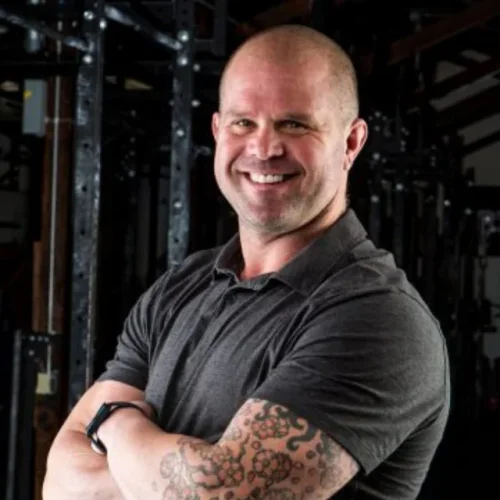
Kelly Starrett
Physical therapist known for mobility, movement mechanics, and injury prevention education.
Last updated: Feb. 2026
☀️ Morning
Dose: 2,000 IU
Vitamin D often listed among simple foundational supplements depending on sun exposure.
📋 Anytime
Dose: 3–5g
Commonly featured as a strength + cognition-friendly staple in performance contexts.
Dose: 10–20g
Often used to support connective tissue goals; pairs well with strength + rehab focus.
About Kelly Starrett
Kelly Starrett has emerged as a significant figure in the health and fitness world, particularly known for his work in mobility, movement mechanics, and injury prevention. As a physical therapist who blends clinical knowledge with practical athletic training, Starrett has carved a niche that bridges rehabilitation and performance enhancement.
His approach emphasizes the importance of maintaining movement quality over time, a stance that resonates in a fitness culture often focused on intensity and volume.
At the heart of Starrett’s work is a commitment to helping people move better, whether they are elite athletes or everyday individuals. His writings and teachings often challenge common fitness practices that may inadvertently lead to injury or chronic discomfort.
By focusing on biomechanics and self-care techniques, he encourages a proactive approach to physical health that prioritizes function and longevity.
His influence extends beyond clinical settings into mainstream fitness communities, partly through his bestselling book, "Becoming a Supple Leopard," which has become a reference in movement education. Starrett’s methods are grounded in his experience as both a physical therapist and a CrossFit trainer, creating a unique blend that has shaped how many view injury prevention and mobility training.
How Their Ideas Have Evolved
Kelly Starrett’s ideas have developed alongside growing awareness in the fitness world about the importance of mobility and proper mechanics. Early in his career, he combined his physical therapy background with CrossFit’s rising popularity, recognizing that many athletes pushed their bodies hard but lacked foundational movement quality.
His initial focus was on correcting dysfunctional movement patterns to prevent injury and improve performance. Over time, he expanded his work to include detailed assessments of joint mechanics and soft tissue health, advocating for self-administered mobility work through tools like foam rollers and lacrosse balls.
Starrett’s approach has also become more holistic. Beyond just treating pain or dysfunction, he emphasizes movement as a lifelong skill. This perspective encourages consistent practice of mobility drills and corrective exercises as part of daily habits, not just rehabilitation.
He has also integrated modern technology and biomechanics research into his teachings, refining his methods as new evidence emerges. This evolution reflects a balance between practical application and scientific insight, keeping his concepts relevant and accessible.
Their Influence on Fitness Culture
Kelly Starrett has influenced fitness culture by shifting conversations toward sustainable movement practices. His work has helped popularize the idea that mobility is as crucial as strength or endurance, introducing many to the concept of prehab — exercises designed to prevent injury before it occurs.
In CrossFit and other high-intensity training communities, his teachings prompted athletes and coaches to rethink warm-up routines and recovery strategies. Rather than simply pushing harder, participants began to focus on how they move, fostering longer careers and fewer injuries.
Starrett’s influence is also apparent in the rise of mobility-focused classes, workshops, and online content. His extensive video library and courses have democratized access to specialized knowledge once confined to clinical settings.
His advocacy for self-care tools and techniques has empowered individuals to take ownership of their movement health, reducing dependence on professional intervention when minor issues arise. This empowerment aligns with a broader trend toward personal responsibility in fitness and wellness.
- Helped shift fitness culture’s emphasis to mobility and injury prevention
- Integrated clinical knowledge with athletic training methods
- Popularized self-care tools for ongoing movement maintenance
- Fostered a community that values movement quality over sheer intensity
Background and Public Profile
Kelly Starrett is an American physical therapist with a background that combines clinical expertise and athletic coaching. He first gained widespread attention through his association with CrossFit, where his focus on movement quality and injury prevention found a ready audience.
His 2013 book, Becoming a Supple Leopard, brought his methodologies to a broad readership and was recognized as a New York Times bestselling sports book. The book systematically outlines how to optimize movement mechanics to achieve better performance and reduce injury risk.
Beyond his book, Starrett has developed numerous courses, videos, and seminars, making him a prolific educator in the field. His public talks and workshops often emphasize practical applications of movement science, aiming to make complex concepts understandable and actionable.
He has also contributed to various media outlets and collaborated with fitness brands, further expanding his reach. His public profile is characterized by a mix of clinical authority and an accessible teaching style.
- Author of Becoming a Supple Leopard, a bestselling fitness book
- Physical therapist with specialization in movement and mobility
- Known for educational content including talks, courses, and videos
- CrossFit trainer and consultant with a clinical perspective
Who Their Advice Fits Best
Kelly Starrett’s advice is particularly well-suited for individuals who engage in athletic or fitness activities that demand mobility, agility, and injury resilience. This includes CrossFit athletes, weightlifters, runners, and anyone involved in functional training.
His teachings are beneficial for people experiencing chronic joint or muscle stiffness, as well as those recovering from injury who want to regain optimal movement patterns. However, his guidance is not limited to athletes; anyone interested in maintaining physical independence and quality of movement over time can benefit.
Because Starrett’s approach involves detailed biomechanical assessments and self-administered mobility drills, individuals who are motivated and willing to invest time into learning proper technique will gain the most. Casual exercisers may find some of the concepts complex without hands-on instruction but can still apply the foundational principles.
His methods also appeal to fitness professionals and therapists seeking to deepen their understanding of movement mechanics and injury prevention strategies.
Practical Takeaways You Can Apply This Week
Applying Kelly Starrett’s ideas doesn’t require dramatic lifestyle changes but rather attention to everyday movement habits. Starting with a few targeted practices can improve mobility and reduce discomfort.
Begin with a simple self-assessment of your posture and joint function, focusing on areas like the hips, shoulders, and thoracic spine. Use gentle mobility drills to address stiffness in these regions.
Incorporate short sessions of soft tissue work using tools like foam rollers or massage balls. These can help release tension and improve tissue quality, making movement smoother.
Prioritize movement quality over speed or load during workouts. Slow down and pay attention to joint alignment and muscle engagement to reduce injury risk.
Finally, practice consistent warm-up routines that prepare your body for the specific demands of your activity, emphasizing mobility and activation rather than just cardio.
- Perform daily mobility drills targeting key joints
- Use self-myofascial release tools for tissue health
- Focus on controlled movement with proper alignment
- Develop a warm-up routine emphasizing mobility and activation
The Business Layer Behind the Brand
Kelly Starrett has built a multifaceted brand that extends beyond clinical practice into education, publishing, and digital content. His business model leverages his expertise through books, online courses, and workshops, reaching a global audience.
By offering tiered access to information—from free videos to paid comprehensive programs—he has created multiple revenue streams. His collaborations with fitness equipment manufacturers and wellness companies further complement his brand presence.
Starrett’s emphasis on quality education and accessible movement knowledge has fostered a loyal community, which supports ongoing product development and content creation.
His business reflects a broader trend in health and fitness toward expert-led online education, combining evidence-based practice with practical usability.
Closing Perspective
Kelly Starrett stands out in the health and fitness landscape as a practitioner who bridges therapy and athletic training with a practical focus on longevity and function. His work challenges conventional fitness priorities by emphasizing movement quality and injury prevention as foundational elements.
For anyone serious about sustainable fitness, his methods offer grounded, actionable strategies rooted in clinical expertise. While his concepts may require careful study and practice, they encourage a mindful approach to physical health that extends well beyond short-term goals.
Ultimately, Starrett’s influence reflects a growing recognition that how we move is as important as how much we move—a perspective increasingly vital in a culture driven by performance metrics and rapid results.
⚠️ Based on public books, courses, and talks. This information is for educational purposes only and should not be considered medical advice.