
The information on Supplement Engine is for general educational purposes only and is not medical advice. It is not intended to diagnose, treat, cure, or prevent any disease, and should not replace consultation with a qualified healthcare professional. Availability and legal status of specific products vary by country — always check local regulations before purchasing. Supplement Engine is not affiliated with, endorsed by, or representative of the individuals whose public protocols are discussed on this site; all information is drawn from public statements and is provided for informational purposes only.
Some links on this page may be affiliate links. If you choose to make a purchase, we may earn a small commission at no additional cost to you.
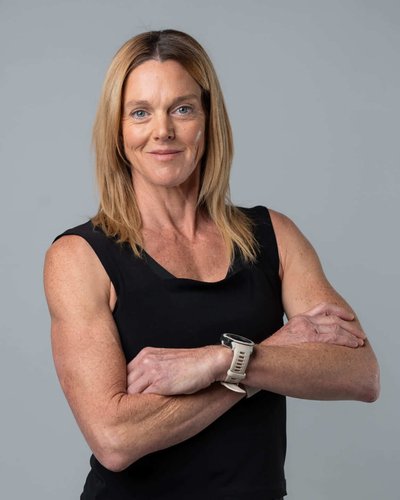
Stacy Sims
Exercise physiologist known for women-specific training and nutrition considerations across the lifespan.
Last updated: Feb. 2026
☀️ Morning
📋 During Workout
Dose: 1 serving
Hydration/electrolytes are commonly emphasized for training performance and recovery.
📋 Anytime
Dose: 20–40g
Protein adequacy is commonly emphasized; powder is a convenience tool.
About Stacy Sims
Stacy Sims stands out in the crowded world of health and fitness as a voice focused on the nuances of women’s physiology. Her work challenges the “one-size-fits-all” approach that has long dominated exercise science and nutrition.
By emphasizing female-specific considerations, Sims has helped shape a more personalized and evidence-based approach to training and fueling for women.
Sims is not simply an influencer chasing trends; she brings a solid foundation as an exercise physiologist and nutrition scientist. Her research and advocacy focus on how women’s bodies respond differently to training stimuli, nutrition, and supplementation compared to men.
This perspective has gained traction in both the athletic community and among health professionals looking to close the knowledge gap in female fitness.
Her influence extends through books, talks, and numerous interviews where she unpacks the complexities of hormones, metabolism, and performance for women across different stages of life. Sims’ work is grounded in science but communicated in a way that prioritizes real-world application.
Nutrition, Diet, and Supplement Position
At the heart of Stacy Sims’ approach is the recognition that women’s nutritional needs shift with their menstrual cycle, hormonal changes, and life phases such as pregnancy or menopause. She advocates for periodized nutrition strategies that adjust macronutrient intake depending on where a woman is in her cycle.
Sims is particularly known for challenging conventional carb and hydration guidelines that often neglect female physiology. For example, she highlights how women tend to oxidize fat more efficiently and may not require the same carbohydrate loading strategies as men.
This has implications for endurance athletes aiming to optimize fuel utilization without unnecessary carbohydrate dependence.
When it comes to supplements, Sims encourages evidence-based choices tailored to women’s hormonal milieu. She is cautious about blanket recommendations and stresses that many commonly used supplements have not been adequately tested in female populations.
- Emphasizes cycle-based nutrition and hydration adjustments
- Advocates for higher fat intake relative to traditional endurance diets for women
- Supports iron and electrolyte monitoring given women’s unique risks
- Warns against over-reliance on male-centric supplement data
- Encourages natural food sources over unnecessary supplementation
What Beginners Should Copy First
For those new to the fitness world, Sims’ first recommendation is to listen closely to the body and recognize that nutrition and training are not static. Beginners should start by tracking their menstrual cycle and noting how energy, appetite, and hydration needs fluctuate.
She advises women to prioritize real food and balanced meals rather than quick fixes or fad diets. Understanding the timing and composition of meals around training sessions is another practical first step, as it can dramatically influence energy levels and recovery.
Hydration strategies are also a key beginner focus. Sims suggests that women may need different fluid and electrolyte intake than what is often recommended, particularly because sweat rates and electrolyte loss can vary.
- Track menstrual cycle and related symptoms
- Focus on whole, nutrient-dense foods
- Time meals to support training and recovery
- Adjust hydration according to individual needs
- Avoid rigid dietary rules without personalization
What They Get Right
Sims is credited with bringing much-needed attention to the fact that women are not small men when it comes to exercise physiology. She correctly identifies that hormonal fluctuations throughout the menstrual cycle significantly impact metabolism, endurance, and injury risk.
Her insistence on periodizing training and nutrition according to these hormonal patterns has been welcomed by athletes and coaches seeking more tailored approaches. Sims also accurately highlights that female athletes have different sweat and electrolyte loss profiles, which alters hydration needs.
By pushing for more research specifically focused on female populations, Sims has helped shift the scientific community toward more inclusive study designs. This has opened the door for more precise recommendations that improve women’s health and performance.
- Highlights hormonal impacts on metabolism and performance
- Supports cycle-based periodization of training and diet
- Emphasizes differences in hydration and electrolyte needs
- Advocates for increased female representation in research
- Challenges male-centric sports science norms
How Their Ideas Have Evolved
Early in her career, Sims concentrated primarily on endurance athletes and the physiological challenges women face in that arena. Over time, her scope has broadened to encompass women’s health across the lifespan, including pregnancy, menopause, and aging.
She has also refined her views on nutrition, moving away from strict dietary dogma toward more flexible, individualized approaches. Sims now recognizes that while science provides a framework, real-world application requires adaptability based on personal responses.
Her supplementation stance has similarly evolved to be more cautious, especially as more data reveals the complexity of female biochemistry and the risks of blindly applying male-focused data to women.
- Expanded from endurance sports to women’s lifespan health
- Shifted from prescriptive diets to flexible, adaptive nutrition
- Increased caution around supplementation recommendations
- Broadened advocacy to include underrepresented female populations
- Emphasizes ongoing research and evidence refinement
Where People Disagree With Them
Not all experts agree with Sims’ emphasis on menstrual cycle-based periodization. Critics argue that the science is still emerging and that individual variability may limit the practical application of rigid cycle tracking.
Some contend that focusing too much on hormonal phases risks complicating training unnecessarily.
Her critique of traditional carbohydrate-centric endurance nutrition has also sparked debate. While many athletes thrive on high-carb diets, Sims’ promotion of higher fat utilization is seen by some as controversial or premature in certain contexts.
Additionally, some suggest that her caution around supplementation may underplay benefits seen when women do use well-studied supplements appropriately. There remains a tension between broad public recommendations and nuanced, individualized guidance.
- Debate over practicality of strict cycle-based training
- Controversy around reduced carbohydrate emphasis
- Differing opinions on the role and safety of supplements
- Skepticism about broad applicability of female-specific findings
- Discussion over balancing science with individual experience
The Core Training Philosophy
Stacy Sims’ core training philosophy revolves around honoring the biological uniqueness of women. She advocates for a training and nutrition approach that is dynamic, responsive, and evolves alongside hormonal and life changes.
Rather than adhering to rigid protocols, Sims encourages women to become attuned to their bodies’ signals and adjust accordingly. This includes modifying training intensity, volume, and recovery based on where they are in their cycle or life stage.
Her approach integrates science with practical application, aiming to empower women to optimize performance without sacrificing long-term health. Education and self-awareness are central themes.
- Training and nutrition must adapt to female biology
- Cycle and life stage awareness guides intensity and recovery
- Emphasis on body feedback and self-monitoring
- Integrates research evidence with individualized practice
- Supports sustainable, health-focused performance
Practical Takeaways You Can Apply This Week
If you want to start applying Sims’ principles right away, begin by tracking your menstrual cycle and noting patterns in energy, hunger, and hydration. Use this information to experiment with meal timing and macronutrient ratios—such as increasing carbohydrates around high-intensity sessions or shifting to more fats during lower-intensity phases.
Pay attention to how your body responds to hydration strategies, especially if you sweat heavily or train in heat. Consider adjusting electrolyte intake accordingly.
Most importantly, focus on consistent whole-food meals and avoid rigid dieting. Allow yourself to adapt to what feels best rather than following generic plans.
- Track cycle and note physical/energy changes
- Adjust meal timing and macronutrients accordingly
- Monitor hydration and electrolyte needs closely
- Prioritize balanced, nutrient-rich meals
- Stay flexible and responsive to your body
Background and Public Profile
Stacy T Sims earned recognition as an exercise physiologist and nutrition scientist with a distinctive focus on women’s health in sports. Her academic work and professional career have centered on bridging the gap in female-specific research that has historically been overshadowed by male-dominated studies.
She is also an author who has published books aimed at athletes and coaches seeking to understand how to optimize training and nutrition for women. Sims frequently appears at conferences and through interviews, sharing insights that challenge old paradigms and encourage more inclusive science.
Her public profile is characterized by a blend of rigorous science and accessible communication. She is seen as a credible expert and advocate for women’s health in the fitness community.
- Exercise physiologist and nutrition scientist specializing in women
- Author of books focused on female training and nutrition
- Frequent public speaker and interviewee on female-specific fitness
- Advocate for closing research gaps in women’s exercise science
- Known for clear, evidence-based communication
Signature Content and Teaching Style
Stacy Sims’ content stands out for its clarity and scientific grounding without losing sight of practical application. She often uses analogies and simple explanations to make complex physiological concepts understandable for a broad audience.
Her teaching style encourages active learning and self-experimentation. She invites women to gather data on their own bodies and use it to tailor diets and training rather than passively following generic rules.
Visually, her presentations and written work tend to balance detail with accessibility, often including charts or cycle tracking tools to aid comprehension.
- Clear, science-based explanations made accessible
- Encourages self-monitoring and personalization
- Uses analogies to simplify complex ideas
- Provides practical tools for cycle and nutrition tracking
- Balances depth with readability
Closing Perspective
Stacy Sims has carved a vital niche in the health and fitness world by shining a light on the biological realities unique to women. Her insistence on moving beyond male-centric models has helped foster more nuanced and effective training and nutrition strategies for women at all levels.
While some aspects of her work remain debated or evolving, her contribution to highlighting the importance of sex-specific research and education is undeniable. For women seeking to optimize performance and health, Sims offers a thoughtful, evidence-driven, and adaptable framework that respects individuality and science alike.
Her influence is best seen not as dogma but as a call to rethink assumptions and empower women to understand and respect their bodies through every stage of life.
⚠️ Based on public books, talks, and interviews. This information is for educational purposes only and should not be considered medical advice.